Slav Squat (Slavic Squat): Why They Do It, Stance Secrets & How to Do It Flat-Footed
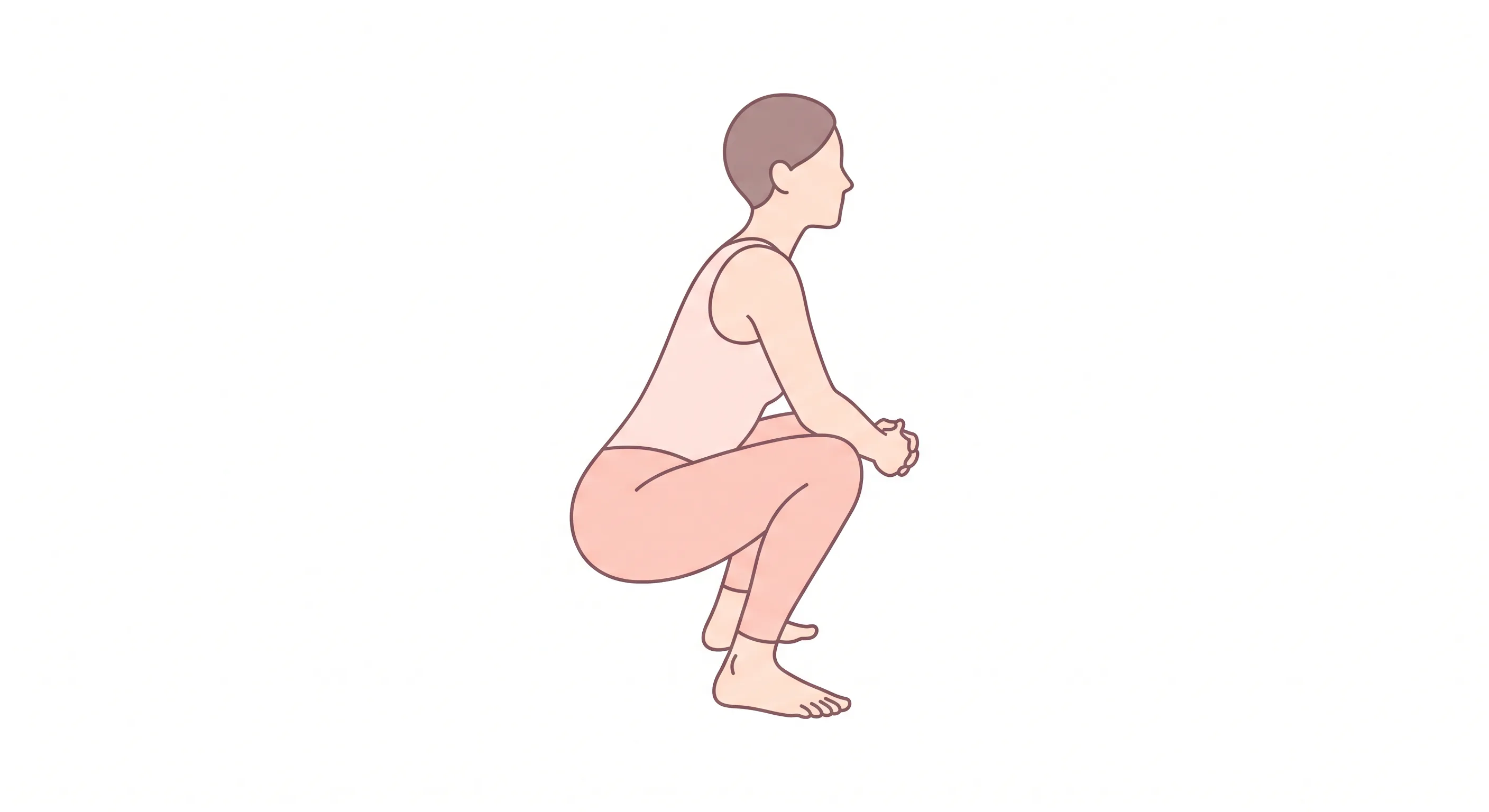
A Slav squat (also known as the Slavic squat, Slav sit, or historically the Eastern European squat) is a flat-footed deep resting squat — the same foundational movement pattern as the Asian squat with a distinct, slightly wider stance. Heels stay planted firmly on the ground, hips sink low between the ankles, and you hold the bottom position relaxed to rest rather than pumping repetitions.
Why Do Slavs Squat? (Real Origins Beyond the Meme)
The question “why do Slavs squat?” became a worldwide curiosity after an internet meme exploded around 2012 across Reddit, 4chan, and YouTube. The viral photos featured Eastern European youths in striped tracksuits squatting on street corners, train platforms, and apartment courtyards. The imagery caricatured the gopnik subculture — a working-class post-Soviet youth archetype. By 2014, the viral Facebook community “Squatting Slavs in Tracksuits” cemented the pose into modern pop-culture lore.
Behind the viral jokes, the real reasons people squat this way across Eastern Europe are strictly practical and historical:
- Avoiding Frozen or Dirty Surfaces: In continental climates with long, snowy, or muddy winters, sitting on public curbs, wet ground, or cold concrete drains core body temperature rapidly. Squatting with heels down keeps the body entirely elevated off freezing earth.
- Lack of Outdoor Seating: During the Soviet and immediate post-Soviet era, public courtyards and informal social hubs often lacked benches. A deep resting squat provided a comfortable, self-contained way to hang out, converse, and smoke for hours without carrying chairs.
- Prison Camp Culture: As documented by sociologists and linguists at Babbel, Soviet prison and labor camp protocols strictly prohibited inmates from sitting or lying down during inspections, roll calls, and yard transfers when benches were absent. Inmates adopted the flat-heeled squat as an authorized, energy-efficient resting posture. Released prisoners brought this habitual posture back into civilian housing estates.
The “Slavic Stance” and Hip Anatomy: Why Wide Works
A frequent term in biomechanics discussions is the slavic stance (or conversational references to slavic hips). Does Eastern European heritage grant unique hip geometry, or is it pure habit?
Anatomically, human hips exhibit natural variations in acetabular depth (how deep the hip socket is) and femoral neck angle (how the thigh bone meets the pelvis). Some individuals possess deep hip sockets that create bony impingement when squatting with narrow, parallel feet.
The traditional Slavic stance bypasses anatomical stiffness through two simple mechanical adjustments:
- Wider-Than-Shoulder Foot Placement: Feet are set wider apart than in a classic Olympic weightlifting squat or narrow Asian squat.
- Outward Toe Flare (30° to 45°): Turning the toes outward creates extra clearance for the femur within the acetabulum, preventing hip pinch.
- Vertical Shin Angle: Because the hips sink down between the thighs rather than directly over the feet, forward knee travel is minimized. This significantly reduces the ankle dorsiflexion requirement — making the posture instantly accessible even for people with stiff Achilles tendons or desk-bound calves.
Slav Squat vs Asian Squat vs Deep Squat: What’s the Difference?
| Label | Same movement? | Distinct Stance & Context | Ankle Mobility Demand |
|---|---|---|---|
| Slav squat | Yes | Wider foot stance, flared toes, Eastern European / cultural context | Moderate (wide stance compensates for tight ankles) |
| Asian squat | Yes | Narrower stance (roughly hip-width), everyday habit across Asia | High (requires 35°+ dorsiflexion to keep heels down) |
| Deep resting squat | Yes | Clinical / coaching term without cultural associations | Variable depending on stance width |
| Primal squat | Yes | Functional fitness / physical therapy mobility framing | Gradual progression |
Fitness biomechanics researchers at Stellar Chinese and FitnessApie emphasize: the underlying movement is universally human. Toddlers of every ethnicity naturally rest in a deep flat-footed squat. What separates modern adults is not genetics, but lifelong lifestyle habits: cultures that rely on floor seating and squat toilets preserve their range of motion, while chair-heavy cultures lose it.
What We Noticed Building MeshyFit
While calibrating depth angles and hip-crease tracking for MeshyFit’s on-device rep counter, our engineering team alternated between narrow-stance holds and wide Slavic stances between programming blocks:
- The wide stance delivered instant depth for stiff developers: Team members with tight desk-bound calves who toppled backwards in a narrow squat could immediately reach full depth in a wide Slavic stance.
- Resting holds do not register as workout reps: The MeshyFit computer vision engine validates cyclical down-and-up kinematic curves. A 60-second passive resting hold builds joint mobility, but dynamic repetitions build muscle tone and cardiovascular stamina. The engine deliberately separates the two.
Does It Have Real Fitness Value?
Yes — but specifically as a daily mobility restoration drill, not a primary strength exercise:
- Pelvic & Hip Decompression: Hanging out in a deep squat opens tight adductors, relieves posterior pelvic tilt, and decompresses the lumbar spine after prolonged sitting.
- Ankle Mobility Maintenance: Fitness sources indicate roughly 35° to 38° of ankle dorsiflexion is needed for a relaxed deep squat, compared to only ~25° to 30° found in sedentary office workers. Practicing the Slavic stance gently stretches the soleus and Achilles tendon.
- What It Doesn’t Do: A passive sit does not build progressive muscular hypertrophy or count as your workout quota. If your goal is firmer legs, higher calorie burn, and measurable fitness, you must transition from static holds to dynamic reps.
How to Slav Squat: Step-by-Step Technique (Heels Down)
To perform a clean, flat-footed Slav squat without falling backward:
- Set Your Base (The Slavic Stance): Stand with your feet slightly wider than shoulder-width. Turn your toes outward roughly 30° to 45°.
- Open the Knees Early: As you begin sitting down, push your knees outward in the exact direction your toes are pointing. Do not let your knees collapse inward.
- Drop the Hips Between Your Feet: Sink your hips straight down between your heels rather than reaching back like a powerlifting box squat.
- Keep Heels Grounded: Maintain full contact across the tripod of each foot (heel, base of big toe, base of pinky toe). If your heels rise, widen your stance another inch.
- Relax Into the Bottom: Rest your elbows inside your inner knees or let your arms hang relaxed. Keep breathing through your belly. Hold for 30 to 60 seconds.
FAQ
Why do Slavs squat with their heels flat?
Squatting with heels flat on the ground ensures total skeletal stability, allowing you to relax muscles and rest for hours without fatiguing your calves. In contrast, balancing on the balls of your feet (the “Western spy squat” meme) requires constant calf contraction and tires you out within minutes.
What is the difference between a Slav squat and an Asian squat?
Both are flat-footed deep resting squats. The main difference lies in stance width: an Asian squat typically features a narrower, hip-width stance requiring greater ankle flexibility, whereas a Slav squat utilizes a wider stance with toes flared out, reducing ankle mobility demands.
Why can’t I keep my heels down during a Slav squat?
If your heels lift off the ground, the root cause is almost always tight calves (limited ankle dorsiflexion) or a stance that is too narrow for your hip anatomy. Widen your feet past shoulder-width, point your toes out 35°, and practice holding onto a doorframe for balance.
Is the Slav squat just a meme?
The meme and tracksuit imagery are humorous internet tropes, but the posture itself is an ancient, functional human resting posture practiced for generations across Eastern Europe, Asia, and indigenous cultures worldwide.
Can MeshyFit count Slav squats?
MeshyFit tracks dynamic workout squats (air squats, bodyweight reps, jump squats). It does not score static resting holds as reps. See our squat counter app guide for how our AI rep detection works.
Related reading
- Asian Squat Explained — Full mobility breakdown, practice steps, and teaching diagram.
- Squat Form for Beginners — Step-by-step active workout form.
- Bodyweight and Air Squat Workouts — Progressive home training routines.
- Spanish Squats for Knee Rehab — Banded quadriceps loading and patellar tendon care.
- MeshyFit Squat Counter App — Automatic on-device rep counting.
About the authors
Written by the MeshyFit Team — builders of a privacy-first iPhone squat counter. We are fitness technologists and movement enthusiasts; nothing here is medical advice.